
A gay Tulum trip works best when you stop expecting a formal gay district and start planning around the venues, beach clubs, and adults-only hotels that genuinely welcome queer travellers. What I would focus on here is simple: where the social energy is, which places feel most reliable at night, how to choose between the beach zone and town, and when Pride-season programming is actually worth timing your holiday around.
The essentials at a glance
- Tulum is welcoming, but it is not a single, labelled LGBTQ+ neighbourhood.
- The clearest queer nightlife anchor is Red Room; the broader social scene lives around Gitano and other beach clubs.
- The hotel zone is the easiest base for nightlife and beach access, while Tulum town usually gives better value.
- Late June is the strongest time for Pride-themed programming, but weekend nights matter more than weekdays.
- Budget for taxis and beach-club spend; in Tulum, transport can quietly shape the whole trip.
What the scene looks like on the ground
There isn’t a single gay district in Tulum, and that is important because it changes how you should plan the trip. The social life is split between the beach road, where bars and clubs cluster together, and Tulum town, which is more practical for cafés, shops, and a lower nightly spend. The hotel zone sits about 7 km south of town, so once you pick a base, you are also choosing how much you want to depend on taxis.
Legally, the destination is on solid ground for same-sex couples, but the real question is cultural tone rather than legal status. My rule of thumb is to match the setting to the moment: in the main hotel and beach areas, people are used to visible queer couples; on quieter streets or in less touristy corners, I would still keep things measured. IGLTA’s safety guidance makes the same point in broader terms: research local attitudes, and be honest about how much public affection you want on the trip.
That is why Tulum works best for travellers who like a soft-edged, stylish scene rather than a loudly branded party strip. Once you understand that, the venue choices start to make sense.
The places I would prioritise first
Red Room for a clearly queer night out
Recent listings and traveller reviews keep Red Room at the centre of Tulum’s queer nightlife. As listed now, it runs late every day, with drag shows on several nights and a Saturday strip-night format. That is enough to make it my first pick if you want an unmistakably LGBTQ+ room rather than a place that is merely tolerant.
Use it when you want a proper night out with a clear vibe, not when you are after a long, quiet dinner. The point here is confidence: you do not need to guess how the room will feel.
Gitano Beach and Gitano Jungle for social energy
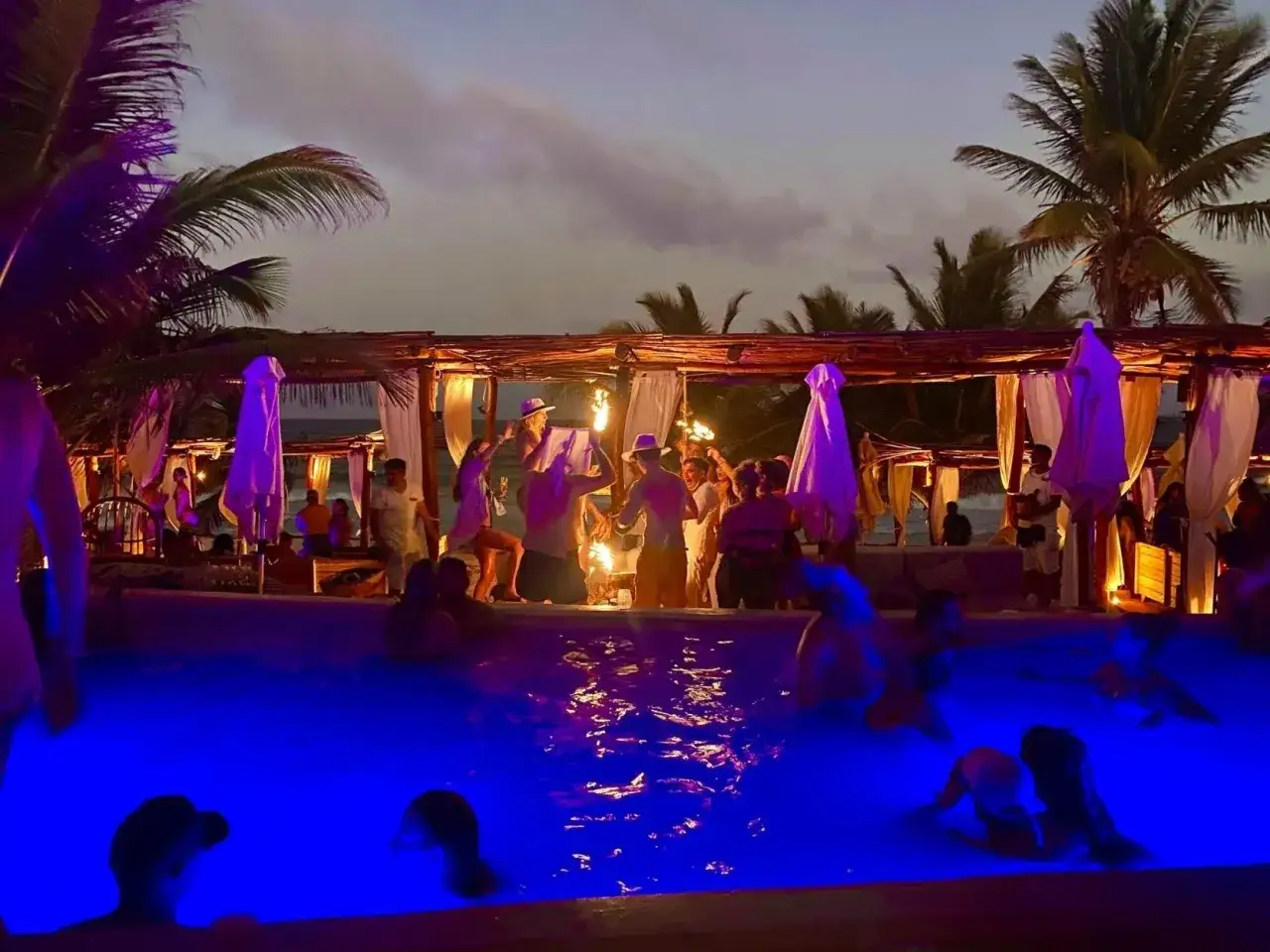
Gitano is not a dedicated gay venue, but it is one of the strongest social magnets in Tulum. Its event calendar has shown weekly parties, beach sessions, and Pride Edition programming in late June, including dinner-and-dancing nights in the jungle and daytime beachfront celebrations. That makes it useful for mixed groups, couples, and anyone who wants a stylish scene where queer visibility is normal rather than announced.
If I were planning a trip around one flexible venue, this would be it. You can build a whole evening around it without committing to a full club night, which is exactly why it works.
Read Also: Lakeside Queer Getaways UK - Find Your Perfect Inclusive Escape
Panamera for a chic, lower-friction base
Panamera sits in a different lane: less obviously queer, more about atmosphere. The property presents itself as a lifestyle boutique hotel with a rooftop, beach club, pool, Mediterranean restaurant, and regular live music or DJ programming. That combination is useful because it gives you an easy place to start the day, have a long lunch, and decide later whether you want to move on to a louder night.
For some travellers, that is a better fit than chasing the most famous party name. Not every trip needs to be built around one club; sometimes the smartest move is choosing a place that keeps the day smooth and the evening open.
Where I would stay for the easiest trip
Accommodation changes the whole rhythm of Tulum because distances, taxis, and atmosphere matter more than they do in a compact city break. My default is simple: if nightlife is the priority, stay in or near the hotel zone; if value and day-to-day convenience matter more, use town as your base. For a lot of travellers, the sweet spot is an adults-only boutique hotel that gives you a calmer room but still keeps you close to the beach or a shuttle.
| Base | Best for | Why it works | Trade-off |
|---|---|---|---|
| Hotel zone | Beach clubs, nightlife, sunset dinners | Closest to the social strip, easiest if you want late nights and sea views | More expensive and taxi-dependent |
| Tulum town | Better value, cafés, shopping, ruins access | Practical and walkable for food and errands | You lose the instant beach feel |
| Adults-only boutique stay | Couples, quieter trips, private downtime | Usually calmer and more polished than family resorts | Some are great on paper but too remote in practice |
Two properties that illustrate the split well are Layla Tulum in town and Hotel Panamera in the beach area. Layla is the kind of urban, adults-only base that suits longer stays; Panamera is better if you want the day-to-night social flow built into the property. There is also a narrower, clothing-optional male-only option in local gay travel guides, but that is a niche choice rather than the default.
My advice is not to book the prettiest room first. Book the room that makes the rest of the trip easy, because in Tulum the wrong location can cost you more in transport and time than the room rate itself.
When the calendar matters more than the map
Tulum’s queer-friendly scene is strongest when the events calendar is active, not just when the weather is good. In 2026, venue calendars already showed late-June Pride programming, which tells you something useful: the city’s LGBTQ+ energy is increasingly event-led. Tulum does not feel like a big-city Pride capital; it is more a beach destination that occasionally turns its nightlife into Pride programming. If you want the highest odds of a lively crowd, aim for Thursday through Sunday and try to overlap with Pride week if your dates are flexible.
Seasonally, November to April is still the cleanest weather window for most travellers, especially if you care about beach days and outdoor dinners. Summer and early autumn can still work, but rain, humidity, and storm risk change the mood of the trip. I would not plan a beach-club-heavy itinerary in peak wet season unless I had backup ideas for the evenings.
What this means in practice is straightforward: if you want a quiet romantic break, go off-peak and book a strong hotel. If you want social energy, time your visit around a weekend and check which venues have announced parties before you leave the UK.
How to avoid the usual mistakes
The biggest mistake I see is assuming that every stylish venue is automatically queer-friendly. Tulum has plenty of beautiful spaces, but the vibe can swing from openly welcoming to simply tolerant, and that difference matters if you want to relax fully. My other rule is to treat taxi cost as part of the trip, not an afterthought; once you start bouncing between town, the beach road, and late-night venues, transport becomes a real line item.
- Do not base yourself too far from the part of Tulum you will actually use at night.
- Do not assume beach clubs are cheap just because they look relaxed.
- Do not leave venue research until the last minute if you are travelling for Pride week.
- Do not confuse a polished design aesthetic with actual queer comfort.
- Do not forget to compare Tulum International Airport with Cancún if you are flying from the UK, because the arrival airport changes your transfer time more than most hotel upgrades do.
For budgeting, I would personally allow roughly $60 to $120 per person for a full beach-club day once food, drinks, and local transport are included, with more if you choose a premium table or bottle service. That is not a hard rule, but it is a realistic way to avoid underestimating the trip.
A first long weekend that actually makes sense
If you only have three or four nights, keep the structure simple. I would arrive, check into the hotel zone or town, and use the first evening for a low-pressure dinner rather than trying to conquer the whole nightlife scene at once. On the second day, I would do a beach club lunch or a chilled afternoon at Panamera or Gitano Beach, then choose between Red Room for a clearly queer night or a more mixed event if that is the mood.
The third day is where Tulum usually feels best: a slower morning, a cenote or ruins visit, and an open evening that can absorb either another party or a quiet rooftop drink. If your dates line up with Pride programming, that is when I would prioritise the venue calendar over the sightseeing list.
This kind of rhythm matters because Tulum is easy to overbook and under-enjoy. Leave space for one spontaneous detour, and the trip tends to feel better.
The version of Tulum I would book again
If I were planning the trip from scratch, I would treat Tulum as a place for curated queer-friendly moments rather than a destination that hands you a full gay scene on arrival. One clear nightlife anchor, one social beach day, and one well-chosen base are usually enough to make the trip feel effortless.
The practical formula is simple: stay close to the part of town you will use most, book at least one venue-led night, and be realistic about transport and spend. That approach gives you the best version of the destination without expecting it to be something it is not.
For a British traveller, that usually means one clearly queer night, one social beach day, and a base that keeps taxis from eating the budget. That is the version of Tulum I would book again.