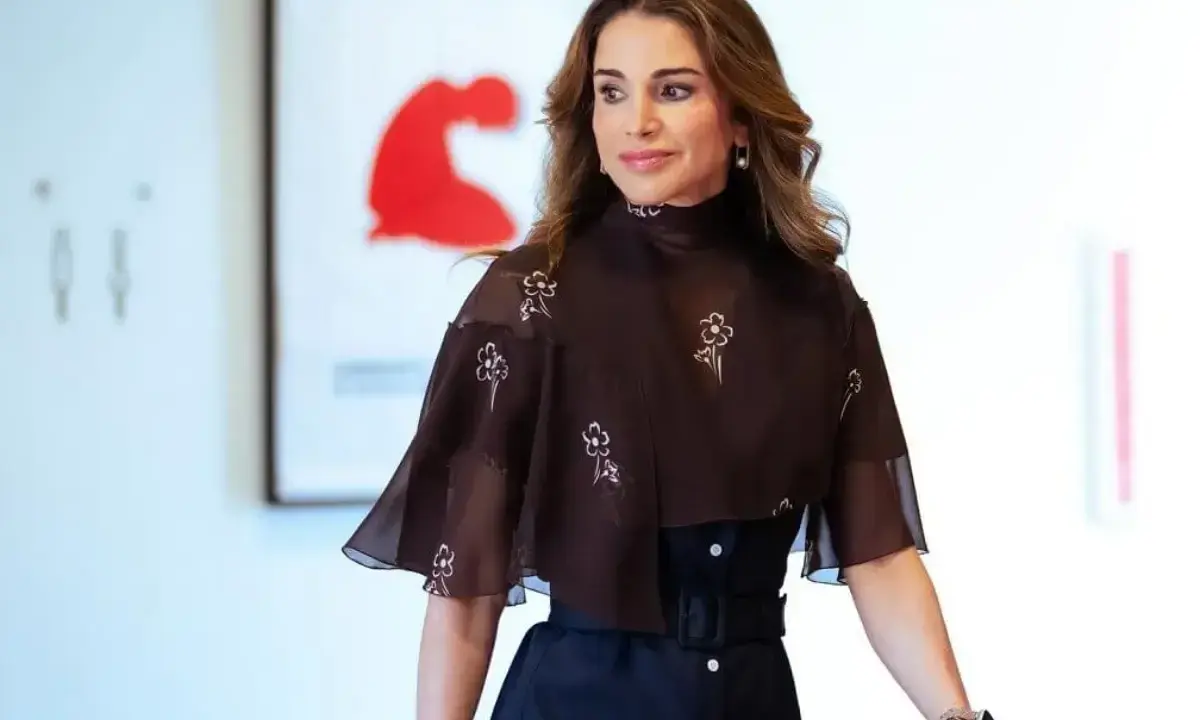
The style logic behind her wardrobe
- Tailoring is the backbone of most looks.
- She uses colour sparingly, then lets one detail lead.
- Heritage pieces and modern luxury sit side by side rather than competing.
- Accessories stay refined, which keeps the outfit readable.
- Context matters: state visit, local engagement, and off-duty appearances all get different treatment.
The signature formula behind her wardrobe
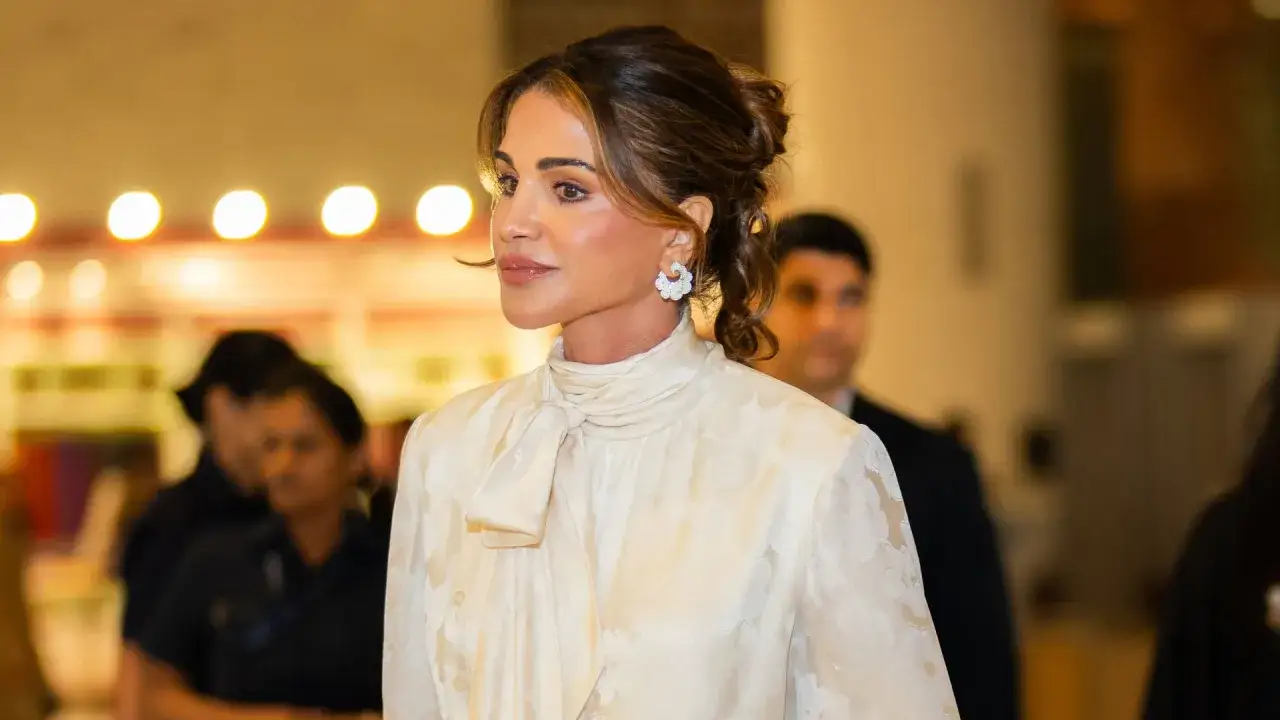
What I notice first is that she almost always solves the outfit before she decorates it. The shape comes before the embellishment, which is why even her most detailed looks still feel calm rather than crowded. Clean shoulders, defined waists, midi lengths, and smooth lines do most of the heavy lifting.
That approach gives her room to play with texture without losing control. A soft blue dress can feel regal if the cut is exact. A sharp suit can feel fresh if the fabric moves well. A thobe or embroidered dress can feel modern if the rest of the styling is quiet. The result is a wardrobe that reads as disciplined rather than restrained, which is a useful distinction.
- Structure first. Jackets, blazer dresses, straight skirts, and column shapes give the outfit authority.
- One focal point. A sleeve, an embroidered panel, a colour block, or an unusual cut gets to lead.
- Soft power in colour. Ivory, camel, pale blue, blush, black, and rich red all appear often, but rarely in chaotic combinations.
- Accessories stay in support. Pumps, compact bags, and fine jewellery finish the look without stealing it.
That basic formula becomes clearer once you look at the labels she returns to most.
The designers she keeps in rotation
Her wardrobe is interesting because it is not locked to one fashion camp. Harper's Bazaar Arabia has pointed to recurring favourites such as Givenchy, Elie Saab, and Tamara Ralph, while Vogue Arabia has recently highlighted a green ombré Loewe look alongside intricately embroidered Jordanian thobes. That mix tells you a lot: she is not collecting logos, she is collecting effects.
| Designer or house | What it gives her | Why it works on her |
|---|---|---|
| Dior | Dresses, shoes, bags, and formal finishing touches | It delivers classic polish without looking stiff |
| Elie Saab | Gowns and ceremonial looks | It brings regional glamour and detailed craftsmanship |
| Tamara Ralph | High-formality moments | The tailoring feels sculpted, elegant, and controlled |
| Loewe | Statement colour and modern tailoring | It adds fashion intelligence without losing composure |
| JW Anderson | Structured suits and more directional pieces | It gives her wardrobe a sharper British edge |
| Saiid Kobeisy and other regional ateliers | Occasion dressing and heritage moments | It ties the look back to place, family, and tradition |
The important thing is not the label itself. It is the role each label plays. A power suit from one designer, a ceremonial gown from another, and a relaxed day look from a third can all belong to the same person if the visual language stays consistent. That is why her style never feels scattered.
The real test, though, is how she adapts those labels to public roles and political context.
How she uses clothing to speak for Jordan
Queen Rania’s strongest outfits often work because they carry a message without turning into costume. For local engagements, she frequently leans into regional craftsmanship, embroidery, and pieces that feel grounded in Jordanian identity. Tatreez, the hand embroidery common across the Levant, is especially effective here because it adds texture, history, and specificity at once.
On more formal occasions, the message changes. A reception gown, a coronation look, or a state-visit ensemble needs ceremony, so she shifts into cleaner lines and a more international couture vocabulary. The styling still stays recognisably hers, but the outfit answers the room she is standing in. That is the trick many public figures miss: the clothes should not only look good, they should make social sense.
- Match the setting. A palace event, a diplomatic visit, and a community engagement do not ask for the same level of ornament.
- Bring in local craft when it matters. An embroidered garment or regional label can carry more meaning than a loud statement piece.
- Use symbolism lightly. When she adds a keffiyeh or a culturally rooted detail, it feels integrated rather than staged.
That is why her clothes often feel persuasive rather than performative. The same logic also appears in her more relaxed outfits, which are easier to copy in real life.
Her off-duty looks are still highly instructive
Not every useful outfit is a gala dress. Her casual wardrobe often comes down to straight jeans, a crisp tee, cropped outerwear, or a polished co-ord, which proves that the same discipline can work outside formal royalty. Recent coverage has shown her in looks ranging from a deconstructed COS set to a Loewe tunic with cropped trousers, and the point is always the same: relaxed does not have to mean unfinished.
I think this is where a lot of people misread royal style. They assume the value is in the price tag, when the real lesson is in the editing. A clean tee, a good jacket, and the right shoe can look more convincing than a heavily styled outfit that tries too hard.
- Keep the palette tight so the outfit feels deliberate.
- Choose one elevated element, such as a sharp jacket, a sculptural bag, or a clean pointed shoe.
- Let fit do the work instead of piling on details.
- Use accessories to move the outfit up one level, not three.
From there, the most useful question is how to translate her approach into something wearable without copying it literally.
How to borrow the look without copying it literally
You do not need couture to use this formula. In fact, the strongest Queen Rania-inspired outfits are usually the ones that understand proportion, restraint, and context better than they understand luxury. If I were building the look from scratch for a UK wardrobe, I would focus on clean tailoring first and trend pieces last.
| What she does | What it achieves | Easy version to try |
|---|---|---|
| Starts with strong tailoring | Creates instant authority | Try a good high-street blazer or a midi dress with a clean cut |
| Uses one standout detail | Keeps the outfit memorable without feeling loud | Pick one feature, such as a sculpted sleeve, a colour accent, or subtle embroidery |
| Lets accessories stay quiet | Prevents visual clutter | Choose one bag and one pair of shoes that do not fight the clothes |
| Matches the outfit to the event | Makes the look feel intelligent | Dress more formally for structure-heavy settings and keep casual pieces polished for daytime |
| Repeats what works | Builds a recognisable personal style | Keep one silhouette or colour family as your signature |
That is also why her style resonates beyond royal watchers. It treats clothing as self-presentation, not theatre. For readers who care about fashion as identity, that feels more interesting than chasing whatever is loudest on social media.
Why her wardrobe still feels current
Part of Queen Rania’s appeal is that her style speaks the language of the moment without becoming trapped by it. She understands quiet luxury, meaning clothes that rely on cut and fabric more than logos. She understands modest dressing without making it look conservative or dated. She understands how to move between global fashion houses and local craftsmanship without flattening either one.That balance matters now because fashion is increasingly about clarity, not excess. People want clothes that express something, but they also want those clothes to feel wearable, respectful of context, and specific to the person wearing them. Queen Rania gets that better than most public figures. If I had to reduce her fashion to one lesson, it would be this: restraint can be a form of confidence when it is deliberate.
For that reason, her best looks still feel fresh in 2026, and they will probably keep working long after louder trends have faded.